From the American Thinker. Lord, I pray he is correct!
By Gamaliel Isaac
July 11, 2021
Critical Race Theory is liable to end for reasons very similar to the reasons the Salem witch trials ended.
In January 1692, nine-year-old Elizabeth (Betty) Parris and 11-year-old Abigail Williams (the daughter and niece of Samuel Parris, minister of Salem Village) began having fits, including violent contortions and uncontrollable outbursts of screaming. After a local doctor, William Griggs, diagnosed bewitchment, other young girls in the community began to exhibit similar symptoms.
A special court, the court of Oyer and Terminer convened in Salem to hear the cases; and based on spectral evidence the first convicted witch, Bridget Bishop, was hanged that June. Eighteen others followed Bishop to Salem’s Gallows Hill, while some 150 more men, women, and children were accused over the next several months.
Opposition to the trials grew as the family and friends of more and more villagers were accused of witchcraft, including the wife of Governor William Phips. Governor Phips saved his wife by dissolving the Court of Oyer and Terminer and moving all trials to a higher court. This superior court did not allow “spectral evidence” and, since most of the earlier accused witches had been executed due to this evidence, any remaining witches were all ruled innocent.
The tide is turning against Critical Race Theory as those who endorse it become its victims. Most teachers and staff of New York schools went along with the CRT craze, because they were afraid they would lose their jobs if they spoke out against it. In fact even George Davison, the headmaster of New York’s Grace Church school that teaches CRT did not dare admit that he had said in a private conversation with Paul Rossi, a teacher at his school, that “we’re demonizing kids, we’re demonizing white people for being born.” Instead, Davison accused Rossi of misquoting him. Rossi released an audio recording proving his account was accurate after which Mr. Davison, perhaps with some persuasion from his school, decided to retire.
As is well known, revolutions eat their early supporters. Appeasing the CRT crusaders may protect the jobs of teachers and staff in the short term, but in the long term, CRT will destroy them. That is because the goal of the CRT crusaders is equity and achieving equity requires that the jobs whites have be transferred to people of color.
Teachers in the New York High School of Public Service experienced this directly after principal Paula Lev said she was going to get rid of white teachers and fired one of them. According to the New York Post, the teachers had overwhelmingly supported anti-racism and equity. These same teachers became its predictable victims. Prior to this the faculty had no problem teaching Critical Race Theory and dividing the school by race. Belatedly according to the Post, the faculty is rebelling, charging in a vote of no-confidence that Lev has “flagrantly but unsuccessfully attempted to divide our school by race.”
As more and more white workers find that their allegiance to equity and anti-racism is no protection, the day grows closer to when Critical Race Theory will go the way of the Salem Witch Trials. The best way to hasten that day is for maximum publicity to be accorded the fate of those who appease the CRT revolution in vain.
First of all, I did some search to get a photo of the Minnesota State Flag for this post and WOW! t appears they are in the process of redesigning it. I could not believe some of the submissions, albeit I was expecting to see one honoring George Floyd, maybe it’s coming?
Folks, if you live in MN or know someone who resides there, you may want to share this post with them. I can tell this much, if I lived there, which would be akin to living in the real cesspool of politics, yes you guessed it, ILLINOIS, and I had school aged children, you can bet they would not be attending the public school system. Wait till you read this garbage
Vladimir Lenin said:
“Give me just one generation of youth, and I’ll transform the whole world.”
Well, this country is working on that generation right now and before our eyes. And MN is leading the way. Question: Do you know what’s being taught to your children? Do you ask them at the dinner table every night what they learned in school that day? Well, if you don’t, than I happen to think you are part of the problem!!!
Minnesota’s New Social Studies Curriculum Would Racialize First-Graders, Teach High Schoolers About The Evils Of ‘Whiteness, Capitalism, And Christianity’
The Minnesota Department of Education released a draft of its new social studies curriculum standards, which place a new emphasis on diversity, equity, and gender.
The social studies curriculum is up for state-wide review during the 2020-21 school year as part of Minnesota’s 10-year cyclical curriculum review. The Department of Education’s standards committee has dubbed the new framework a “more inclusive approach to social studies education.”
According to a copy of the standards, the committee wants to begin social studies classes with a land acknowledgment. Land acknowledgments tell students that they are learning on land that was conquered by Americans, though once belonged to Native Americans.
“Minnesota is the contemporary and ancestral home of the Anishinaabe and Dakota peoples, and social studies education on this land will acknowledge and honor their contemporary and historical voices,” the draft reads.
Under the new standards, learning about social justice curriculum begins in the first grade. Six and seven-year-olds may be taught about systemic discrimination and how groups have fought against such discrimination.
“[Students will] learn to recognize unfairness, stereotypes, and bias on the individual level (e.g., biased speech) and injustice at the institutional or systemic level (e.g. discrimination),” the curriculum reads. “[Student will] explore how individuals and groups in the past have fought against bias and discrimination through social justice movements.”
The standards insist that fourth-graders investigate how race, ethnicity, gender, age, religion, and geographic location shape the opinions of people.
In fifth grade, students are asked to “investigate how groups (example: women, religious groups, civil rights groups, indigenous peoples, LGBTQ) have advocated for access to greater rights.” Fifth-graders must also learn about the ongoing debate about renaming buildings following the death of George Floyd and the resurgence of the Black Lives Matter movement.
Elementary students are asked to “analyze how different perspectives influenced past decisions to name places and impact changing place names today.”
Middle schoolers may soon be exposed to learning about racism in relation to the criminal justice system in Minnesota, the evils of capitalism, and social justice activism.
The standards ask sixth-graders to “describe the goals, offenses, penalties, long-term consequences, privacy concerns of Minnesota’s juvenile justice system and evaluate the impact on Black, Indigenous, Person of Color (BIPOC) communities.”
Sixth-graders are also asked to assess the goals of activists in their “quest for their voice to be heard.” The standards specifically address the activism of anti-war, racial minorities, immigrants and refugees, women, LGBTQ, and indigenous people.
In seventh grade, students may be asked to describe how profit can be used as “an incentive for people to exploit others or the environment.”
High school students undergo the most intense social justice indoctrination. At one point in the curriculum, freshmen are taught about the evils of “whiteness, Christianity, and capitalism,” and asked to question the country’s founding documents.
According to the standards, ninth-graders must “describe the tactics used by the United States government to claim indigenous and Mexican land, including but not limited to an analysis of the ideology of Manifest Destiny and its relationship to whiteness, Christianity, and capitalism.”
The same students learn about how Euro-Americans allegedly used “whiteness” and traditional gender norms to keep people enslaved.
“Identify how Europeans and Euro-Americans developed new legal justifications for slavery and settler colonialism in the Americas by creating new racial categories (i.e. Whiteness), and new ideas about gender,” the curriculum reads.
Other lessons include an explanation of how “systemic inequity” created barriers to accessing credit, explain how race is a “social construction” used to “oppress people of color,” and learn to embrace gender ideology.
“[Students will] explain the social construction of race and how it was used to oppress people of color and assess how social policies and economic forces offer privilege or systematic oppressions for racial/ethnic groups related to accessing social, political, economic, and spatial opportunities,” the curriculum reads. “[Students will] develop a respectful awareness about how ideas and norms about gender have changed over time, and how members of the LGBTQ+ community have responded to persecution or marginalization by building coalitions in order to promote gender equality/equity.”
Instructors are told to teach about the failure and successes of the 13th, 14th, and 15th Amendments during the Reconstruction era. The curriculum asks teachers to “connect this history to persistent discrimination and inequity in the present.”
Ninth-graders must also question why the United States’ founding documents included only the voices of white people.
“[Students will] analyze the founding documents of the United States, including the Declaration of Independence and the Constitution, as historical sources, asking who created them, whose voices were absent, and whose interests were articulated,” the standards read.
According to the Department of Education’s webpage, the committee will delay making a second draft until it has paid “full attention to issues of diversity and equity.”
During a virtual committee meeting, the department’s Assistant Commissioner for the Office of Teaching and Learning Bobbie Burnham said that the standards will be developed with an emphasis on the “lived experiences” of young, marginalized students.
“The committee has articulated the need to make standards and supporting benchmarks more meaningful by attending to the race, ethnicity, identity, and lived experiences of young people in relation to civic life and acknowledging voices and experiences of marginalized youth,” Burnham said.
A second draft is slated to be released in early June.
The Daily Wire is one of America’s fastest-growing conservative media companies and counter-cultural outlets for news, opinion, and entertainment. Get inside access to The Daily Wire by becoming a member.
Received this in an email from a highly respected retired Marine Colonel friend of mine. They are his words, not mine, but I wholeheartedly agree with his assessment.
“I wonder how much longer this Marine will be tolerated by the present “leadership.” When they see he is an attorney maybe they will be careful as to how to shut him up. What’s going on is very difficult to believe.”
From an opinion piece in Newsweek, Saturday 20 March 2021
In the Marine Corps, we don’t have quotas, but we do have goals. And Marines accomplish goals,” my officer-in-charge told me and a few other brand-new second lieutenants, each of us assigned to temporary recruiting duty while awaiting orders to Quantico. The captain then told us we had to sign up a certain number of college-enrolled racial minorities and females. No need to be too strict on physical fitness or academics, he said. Just bring them in.
That was in 2009. Discrimination of this sort has been an ingrained yet lamentable part of the military’s recruitment, retention and promotion practices for many years. But my fellow officers and I couldn’t have imagined that, 12 years later, our disagreement with these policies would get us labeled “racist,” “sexist,” “bigoted” or “extremists” worthy of “eradication” and “elimination” from the USMC. Yet the Sergeant Major of the Marine Corps said as much in his February 22 “core values” memo.
I’m now a major in the Marine Corps Reserve and a member of a formerly all-male infantry battalion.* This past weekend we had our monthly drill period. A few days before drill, the command told us that all scheduled training on Sunday morning was canceled and replaced with a “stand-down to address extremism in the ranks.”
It was left-wing political programming, as direct as it sounds.
We were instructed that there is a Taliban-like threat in the United States called “domestic terrorism.” These terrorists are characterized in part by “anti-government,” “anti-authority” or “abortion-related” extremism and various “supremacist” ideas. None of these terms are defined. The Marine Corps entrusts the government’s HR department to figure that out.
Reporting requirements are key. Do you suspect someone supports an “extremist ideology?” Alert the chain of command. Have you heard a Marine express “contempt toward officials?” Notify the Naval Criminal Investigative Service. Don’t handle anything on your own. Just rat them out. After all, “service is a privilege” and it’d be a shame to lose that privilege for failing to do your part to stamp out “extremists.” One PowerPoint slide posed this imperative in stark terms: “Do you want to be a Marine or do you want to be part of an organization that sows disunity and hate. You cannot have divided loyalties.”
Where did all this come from? Soft liberalism has taken root in the military over several decades. These alarming trends are already well documented in James Hasson’s book Stand Down: How Social Justice Warriors Are Sabotaging America’s Military. But in the wake of President Joe Biden’s election—and more precipitously since the January 6 “insurrection”—bureaucratic progressivism has hardened into iron-fisted wokeism.
January 6 provided the pretext that the government, media and Democratic Party needed to drum up paranoia about white-nationalist domestic terrorism. A month later, Secretary of Defense Lloyd Austin issued a memo to all Pentagon leadership laying the groundwork for my unit’s Sunday morning indoctrination.
In his memo, Austin announced that the Department of Defense “will not tolerate…actions associated with extremist or dissident ideologies” and ordered all 1.4 million personnel to receive “extremism” training. And he promised it was just the beginning: the “stand-down is just the first initiative of what I believe must be a concerted effort to…eliminate the corrosive effects that extremist ideology and conduct have on the workforce.”
Acting Secretary of the Navy Thomas Harker followed with his own memo. He announced the objective for the entire Navy Department: nothing short of “eradicating extremism.” How? By rooting out “actions that betray our oaths” like promoting “ideology” or “doctrine” that challenges the “gender identity and sexual orientation” agenda or advancing efforts that allegedly “deprive individuals of their civil rights.”
In other words, advocating for the Biblical view of sex and marriage in law and policy is, according to today’s armed forces, tantamount to oath betrayal.
Then came the Marine Corps’ turn to mouth the right things about “extremism.” In late February, the highest-ranking enlisted Marine issued a memo to all hands condemning our institutional failure to “completely eliminate,” “eradicate,” and “conquer” all “racists, bigots, homophobes, and bullies.” Those people “are not welcome” in the military. “It is impossible,” the memo says, “to be both a good Marine and be any one of those things at the same time.” Again, specifics of “those things” are undefined. The author of the memo and the four-star Commandant leave that to the military’s Diversity and Inclusion Task Force.
Finally, on March 5, the Marine Corps released an official directive: no later than April 2, all “commanders and supervisors at all levels will conduct and document a leadership stand-down in order to address issues of extremism in the ranks.” The commandant included a video with the directive, saying, “We must continuously strive to eliminate any division in our ranks.”
We all know what that means: any dissension on any issue that Biden-appointed top brass says is racist, sexist or homophobic will not be tolerated.
There is no doubt as to where all this is headed. The Pentagon’s swift and coordinated “smiting” of Tucker Carlson, who had the gall to “diss” the idea of sending pregnant women to war—an obviously absurd idea to all but the most politically correct officers grasping for a promotion—makes it very clear.
How did we get here? The truth is that today’s military is running on the fumes of our vastly superior forefathers and the ever-shrinking proportion of each branch that still does truly heroic work and accomplishes truly extraordinary feats. The rest is a bloated military-industrial complex given over to Fortune 500-style corporate progressivism.
And if it’s bad in the Marine Corps, imagine how much worse it is in the other services.
America’s enemies are laughing at us. Frankly, we deserve it. But it doesn’t need to be this way. To get back on top, our military must reject “extremism” training, reverse all the progressive policies enacted over the past several years, return to a true meritocracy and focus exclusively on the only thing that matters: winning wars.
We need a military fit for real warriors—not the social justice kind.
Aaron Reitz is a Major in the USMC Reserve, an Afghanistan War veteran and the Texas Deputy Attorney General for Legal Strategy.
* I prepared this article off-duty and in my personal capacity. The views I express here are solely mine and do not reflect those of the Department of Defense, Department of the Navy or the Office of the Attorney General of Texas.
For the life of me I cannot understand how a dedicated hard charging Marine, Enlisted or Officer could stay in a Marine Corps such as this?
I agree with my friend’s comments in that I also wonder how the leftist leaders in our once great Corps will handle this Major. Bravo Zulu for him speaking out. Get em’ Major.
I know not what years my readers served our once great Corps, but I am of the vintage of the writer of the article below. He and I have history that goes back to 1966-67 and carried forward to the late 1980’s.
Our first tour together was in Vietnam in 2/1. I “think” he was a lieutenant, but I could be wrong. As a lowly sergeant in Echo company I know not his assignment; I seem to recall he was a company XO? I attempted to research his assignment in several places, but his all Bio’s aren’t that specific.
The next time was in 9th Marines on Okinawa 1977-78. I was a captain serving as the regimentals Asst OPSO, and he was a major serving as the OPSO with 2/9. That was the start of my feelings concerning this officer. It’s all in the book should you desire more information.
The next time I was a colonel serving as the Training Director at LFTCLant in Norfolk. He was a frocked BG serving as the Asst CG of 2d Marine Division at CLNC. An incident during this tour solidified my opinion of him that still carries on today.
I did see him again a few years ago at a Naples MCL Birthday Ball. I approached him to simply say hello and he did not recognize me. Guess I never made much of an impression on him. He developed the nick name of “Chuckie Cheese Krulak” by some Marines, including me!
To flush out some memory cells, the one accomplishment he enjoys boasting about was he takes credit for establishing the “crucible” in recruit training.
His daddy was Lieutenant General Victor Krulak (aka “The Brute”). In 1964 he was assigned as the Commanding General of all Marine Forces in the Pacific theater (CG FMF Pac), which of course, included the war in Vietnam. Rumor had it he was looking forward to becoming CMC, but in 1967, LBJ choose Leonard F. Chapman instead — a wise choice in my view. The next year Daddy retired.
Now if you think Daddy did not have something to do with the son becoming CMC, you live under a rock. Seriously!
Taken from Project Syndicate, a newsletter purported to provide “a broad range of views by the world’s foremost leaders and thinkers on the issues, events, and forces shaping their lives. ” However, I shall let you decide on their statement
The disproportionate share of insurrectionists at the US Capitol with a military background are not representative of the armed forces as a whole. Nonetheless, as the divide between the military and US civilian society grows, even more attention will need to be paid to weeding out extremists.
BIRMINGHAM, ALABAMA – Revelations that the insurrection at the US Capitol included many former and current members of America’s armed forces have been met with alarm. And yet, as a 35-year veteran and retired commandant of the US Marine Corps, I saw the events of January 6 as the predictable culmination of a growing disconnect between the US military and civilian society.
Once home, many veterans joined organizations like the Veterans of Foreign Wars and the American Legion, where they were surrounded by like-minded people who had served, suffered, and sacrificed together. Jobs were plentiful, and Americans took pride in their country and their military.
Similarly, in the Korean War less than a decade later, though America was never “all in,” it nonetheless had clear strategic goals. As in WWII, US servicemen and women did a remarkable job and came home to an appreciative country.
But then came Vietnam, where most Americans never really knew what their country was fighting for. When the conflict finally came to its ignominious end in April 1975, there was no victory to celebrate (and it certainly was not fireworks that flew from the roof of the US embassy in Saigon). Unlike previous generations, those who fought in Vietnam were not honored for their service and sacrifice. Equally important, the public backlash against the war led to the end of military conscription, which fundamentally transformed the relationship between the military and the American people. The rift created by the shift to an all-volunteer military has grown wider ever since.
After Vietnam, America’s next major war was Desert Storm, in 1990. Again, clear strategic goals were met in a dramatic fashion, and US servicemen and women returned to a proud country – on the cusp of becoming the world’s only remaining superpower with the collapse of the Soviet Union the following year.
Yet by the end of the Gulf War, globalization and technological change had already begun to reshape American society. Old-line industries were being upended, and many manufacturing jobs were disappearing. Although immigration had only a minor effect on the big economic picture, it became a hot-button political issue for those who found themselves out of work. At the same time, a new wave of social-justice issues also started gaining momentum during this period. As a microcosm of America, the US military was not immune to these political dynamics.
It was against this political, social, and economic backdrop that America embarked on its “long war.” Much like Vietnam, the “War on Terror” lacks clear strategic goals and has lost public buy-in over time. Many of those who have fought it subscribe to the apocryphal refrain that while the military was at war, America was at Walmart. After serving multiple tours in Iraq or Afghanistan, servicemen and women who sacrificed years of their lives have received little recognition.
In his 1973 book, The American Way of War, the historian Russell F. Weigley quoted US General George C. Marshall as saying, “a democracy cannot fight a Seven Years’ War,” because any protracted conflict eventually will lose the support of the electorate. The longer a war runs – particularly when it becomes cross-generational – the greater the disconnect between the typical citizen and the soldiers, sailors, airmen, and marines who serve.
he War on Terror is an abiding case in point, helping to shed light on the unrest and extremism that burst into public view at the Capitol. A small minority of alienated former and active service members have concluded that something is wrong in the America for which they fought and sacrificed. The past two presidential elections have fueled this discontent and convinced some that they have a duty to confront perceived domestic “enemies.” Political leaders, meanwhile, have exploited these sentiments for their own advantage.
The COVID-19 pandemic also contributed to a perfect storm. As the economy shed jobs – particularly at the lower end of the income distribution – face-to-face interactions were no longer possible. With deepening social atomization, it has become more difficult to experience solidarity. Angst or boredom have afflicted many, and some have found refuge in online communities espousing extremist ideologies. The 2020 presidential election brought the situation to a boiling point. A sitting commander-in-chief openly sought to overturn a free and fair election with lies and intimidation, and a small minority of his acolytes answered his call to action. Really?
But Americans should have faith. Notwithstanding a few outliers, the US military is unwavering in its support of, and dedication to, the US Constitution. Those in its ranks who harbor extremist views will be discovered and dealt with appropriately. Looking ahead, recruitment methods will be strengthened to weed out extremists. Recruiters will have to look not only at candidates’ social-media activity but also at their “body paint” (tattoos) and other potential indicators of extremist or racist sympathies. Interviews will need to be more pointed, and education for active members improved.
While the troubling trajectory of US military-civil relations has created fertile ground for some members to be radicalized, it is important to remember that the insurrectionists represent an exception. The US military has defended American democracy for centuries and will continue to do so, in keeping with our noblest traditions. Yes, I agree general, you can bet on it!
In sum, I categorize this fellow in the same company as Mattis, Allen, and all the other Kool Aid drinking generals viewing the military through their woke eyes and ears. Krulak says the recruiters will take care of this supposed problem. LOL What does he know about recruiting — Nothing!
Truer words were never spoken. Parents be aware of of what your child is learning in school; ask questions of them. I remember being stationed at Fort Bragg with the Army. This was in the early 70’s and Fayetteville, NC was still somewhat of a segregated town even then. My son went to a school out in town. We were at the dinner table talking about the kids learned that day in school. My son started talking about the “War of Northern Aggression.” Needless to say, he and I had a talk. Our children today are fed so much BS by left-wing progressives hell bent on spewing their own demented personal; beliefs. Look at you child’s text books, homework, required papers, etc. parents need to really ask questions and get them talking. You may be shocked regardless of what grade they are in.
By Larry Elder
When will Black History Month be … history?
Apart from the bizarre notion that educators should set aside one month to salute the historical achievements of one race apart from and above the historical achievements of other races, Black History Month appears to omit a lot of Black history.
About slavery, do our mostly left-wing educators teach that slavery was not unique to America and is as old as humankind? As economist and author Thomas Sowell says: “More whites were brought as slaves to North Africa than Blacks brought as slaves to the United States or to the 13 colonies from which it was formed. White slaves were still being bought and sold in the Ottoman Empire, decades after Blacks were freed in the United States.”
Are students taught that “race-based preferences,” sometimes called “affirmative action,” were opposed by several civil rights leaders? While National Urban League Executive Director Whitney Young supported a type of “Marshall Plan” for a period of 10 years to make up for historical discrimination, his board of directors refused to endorse the plan. In rejecting it, the president of the Urban League in Pittsburgh said the public would ask, “What in blazes are these guys up to? They tell us for years that we must buy (nondiscrimination) and then they say, ‘It isn’t what we want.’”
Do our left-wing educators, during Black History Month, note that President Franklin Delano Roosevelt’s celebrated New Deal actually “hurt” Blacks? According to Cato Institute’s Jim Powell, Blacks lost as many as 500,000 jobs as a result of anti-competitive, job-killing regulations of the New Deal. Powell writes: “The minimum wage regulations made it illegal for employers to hire people who weren’t worth the minimum because they lacked skills. As a result, some 500,000 blacks, particularly in the South, were estimated to have lost their jobs.”
Are students taught that gun control began as a means to deny free Blacks the right to own guns? In ruling that Blacks were chattel property in the Dred Scott case, Supreme Court Chief Justice Roger Taney warned that ruling otherwise would mean that Blacks could legally own guns. If Blacks were “entitled to the privileges and immunities of citizens,” said Taney, “it would give persons of the Negro race, who were recognized as citizens in any one state of the union, the right … to keep and carry arms wherever they went … endangering the peace and safety of the state.”
Are students taught that generations of civil rights leaders opposed illegal immigration and raised questions about legal immigration? After the Civil War, Black abolitionist Frederick Douglass implored employers to hire Blacks over new immigrants. Twenty-five years later, Booker T. Washington pleaded with Southern industrialists to hire Blacks over new immigrants: “One third of the population of the South is of the Negro race. … To those of the white race who look to the incoming of those of foreign birth and strange tongue and habits for the prosperity of the South: Cast down your bucket where you are. Cast it down among the eight millions of Negroes whose habits you know, whose fidelity and love you have tested in days when to have proved treacherous meant the ruin of your fireside.”
About illegal immigration, Coretta Scott King signed a letter urging Congress to retain harsh sanctions against employers who knowingly hire illegal workers. The letter said: “We are concerned … that … the elimination of employer sanctions will cause another problem — the revival of the pre-1986 discrimination against black and brown U.S. and documented workers, in favor of cheap labor — the undocumented workers.”
These are just a few historical and inconvenient notes left on the cutting room floor during Black History Month.
Larry Elder is a bestselling author and nationally syndicated radio talk show host. His latest book, “The New Trump Standard,” is available in paperback from Amazon.com and for Nook, Kindle, iBook’s and GooglePlay. To find out more about Larry Elder, or become an “Elderado,” visit www.LarryElder.com. Follow Larry on Twitter @LarryElder.
Copyright 2021 LAURENCE A. ELDER
POSTCRIPT: Some of you may have seen the live interview where Morgan Freeman said the following. It is true, I personally saw the interview:
“Black history month needs to go away. How would you like it if we dedicate one month out of the year as white history month? American history is our history. So I’ll ask you to stop calling me a black man and I’ll stop calling you a white man. The issue of race only exists because we talk about it. Let it go and die in the past so we can build a future where we aren’t black/white. We are fellow humans.”
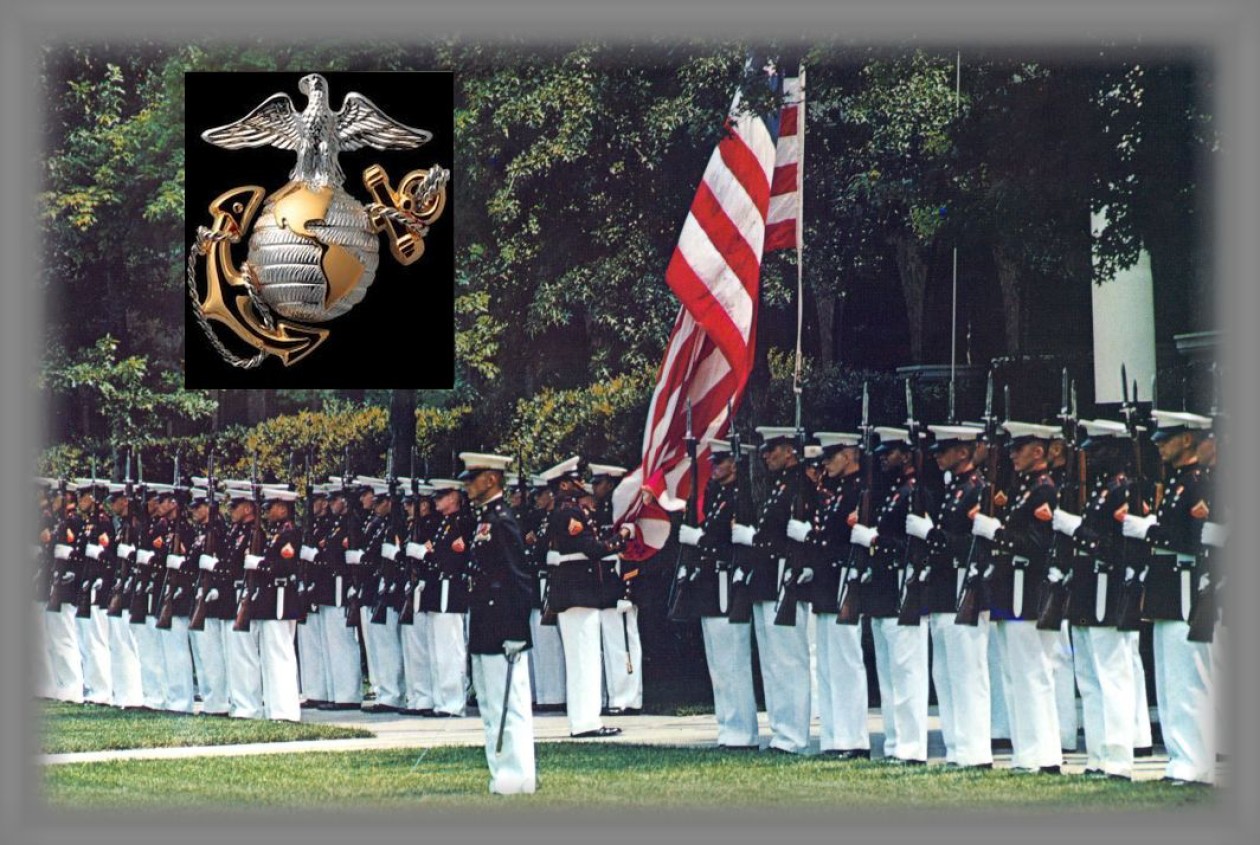


BIRMINGHAM, ALABAMA – Revelations that the insurrection at the US Capitol included many former and current members of America’s armed forces have been met with alarm. And yet, as a 35-year veteran and retired commandant of the US Marine Corps, I saw the events of January 6 as the predictable culmination of a growing disconnect between the US military and civilian society.
Once home, many veterans joined organizations like the Veterans of Foreign Wars and the American Legion, where they were surrounded by like-minded people who had served, suffered, and sacrificed together. Jobs were plentiful, and Americans took pride in their country and their military.
Similarly, in the Korean War less than a decade later, though America was never “all in,” it nonetheless had clear strategic goals. As in WWII, US servicemen and women did a remarkable job and came home to an appreciative country.
But then came Vietnam, where most Americans never really knew what their country was fighting for. When the conflict finally came to its ignominious end in April 1975, there was no victory to celebrate (and it certainly was not fireworks that flew from the roof of the US embassy in Saigon). Unlike previous generations, those who fought in Vietnam were not honored for their service and sacrifice. Equally important, the public backlash against the war led to the end of military conscription, which fundamentally transformed the relationship between the military and the American people. The rift created by the shift to an all-volunteer military has grown wider ever since.
After Vietnam, America’s next major war was Desert Storm, in 1990. Again, clear strategic goals were met in a dramatic fashion, and US servicemen and women returned to a proud country – on the cusp of becoming the world’s only remaining superpower with the collapse of the Soviet Union the following year.
Yet by the end of the Gulf War, globalization and technological change had already begun to reshape American society. Old-line industries were being upended, and many manufacturing jobs were disappearing. Although immigration had only a minor effect on the big economic picture, it became a hot-button political issue for those who found themselves out of work. At the same time, a new wave of social-justice issues also started gaining momentum during this period. As a microcosm of America, the US military was not immune to these political dynamics.
It was against this political, social, and economic backdrop that America embarked on its “long war.” Much like Vietnam, the “War on Terror” lacks clear strategic goals and has lost public buy-in over time. Many of those who have fought it subscribe to the apocryphal refrain that while the military was at war, America was at Walmart. After serving multiple tours in Iraq or Afghanistan, servicemen and women who sacrificed years of their lives have received little recognition.
In his 1973 book, The American Way of War, the historian Russell F. Weigley quoted US General George C. Marshall as saying, “a democracy cannot fight a Seven Years’ War,” because any protracted conflict eventually will lose the support of the electorate. The longer a war runs – particularly when it becomes cross-generational – the greater the disconnect between the typical citizen and the soldiers, sailors, airmen, and marines who serve.
he War on Terror is an abiding case in point, helping to shed light on the unrest and extremism that burst into public view at the Capitol. A small minority of alienated former and active service members have concluded that something is wrong in the America for which they fought and sacrificed. The past two presidential elections have fueled this discontent and convinced some that they have a duty to confront perceived domestic “enemies.” Political leaders, meanwhile, have exploited these sentiments for their own advantage.
The COVID-19 pandemic also contributed to a perfect storm. As the economy shed jobs – particularly at the lower end of the income distribution – face-to-face interactions were no longer possible. With deepening social atomization, it has become more difficult to experience solidarity. Angst or boredom have afflicted many, and some have found refuge in online communities espousing extremist ideologies. The 2020 presidential election brought the situation to a boiling point. A sitting commander-in-chief openly sought to overturn a free and fair election with lies and intimidation, and a small minority of his acolytes answered his call to action. Really?
But Americans should have faith. Notwithstanding a few outliers, the US military is unwavering in its support of, and dedication to, the US Constitution. Those in its ranks who harbor extremist views will be discovered and dealt with appropriately. Looking ahead, recruitment methods will be strengthened to weed out extremists. Recruiters will have to look not only at candidates’ social-media activity but also at their “body paint” (tattoos) and other potential indicators of extremist or racist sympathies. Interviews will need to be more pointed, and education for active members improved.
While the troubling trajectory of US military-civil relations has created fertile ground for some members to be radicalized, it is important to remember that the insurrectionists represent an exception. The US military has defended American democracy for centuries and will continue to do so, in keeping with our noblest traditions. Yes, I agree general, you can bet on it!
CHARLES C. KRULAK
Writing for PS since 2020
4 Commentaries
In sum, I categorize this fellow in the same company as Mattis, Allen, and all the other Kool Aid drinking generals viewing the military through their woke eyes and ears. Krulak says the recruiters will take care of this supposed problem. LOL What does he know about recruiting — Nothing!