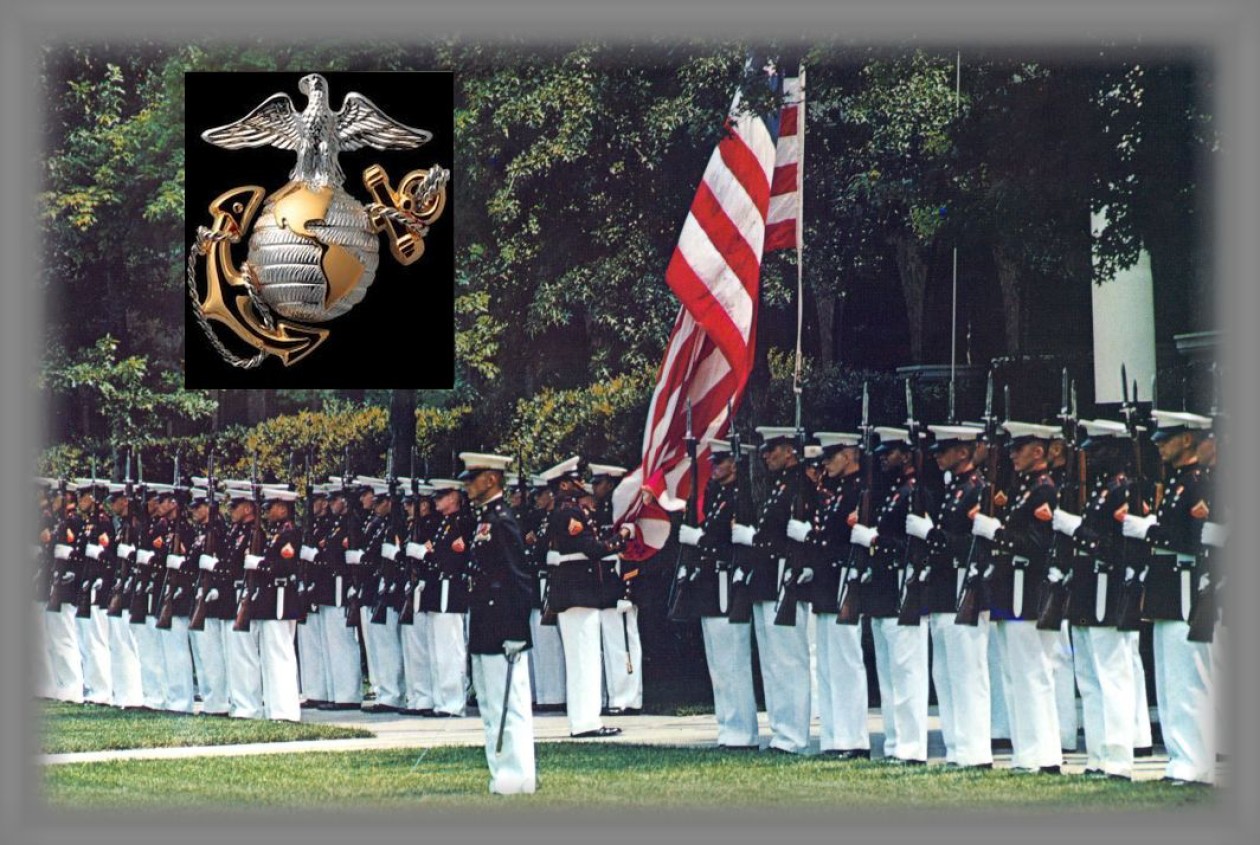
Another informative and thought provoking treatise from my good friend and our Marine Brother. Thank you Greg.
Holding the bag.
By Greg Maresca
While many Americans would have trouble finding Utah on a map, let alone Ukraine, they would equally struggle with the acronym, NATO, that if we are being truthful means: Not Able To Operate (without the U.S.). They need to drop the “N” and make it ATO – American Treaty Organization, a synonym for American expeditionary forces.
NATO was established in 1949 to defend Western Europe from the Soviet Union. Its mission according to the alliance’s first Secretary General, Lord Hastings Ismay, “to keep the Russians out, the Americans in and the Germans down.”
The post-Soviet Union Russia retained its formidable military that includes thousands of nuclear warheads, so disbanding NATO was out of the question. Besides, alliances, like government bureaucracies, rarely disappear. More importantly, peace through strength is no cliché. Tyrants will always exploit weaknesses and it’s naïve to believe otherwise.
In his historic 1796 Farewell Address, George Washington made it clear how he opposed alliances. Defense treaties always work to the advantage of one country and to the disadvantage of another.
The other always being the United States and as the most powerful member we will continue to pay for ensuring its effectiveness.
NATO protects Europeans from having to provide for their own defense. It is a lot easier to let the American taxpayer pick up the tab, while also keeping the sea lanes free and open. Granted, it’s in my interest if my neighbor’s house doesn’t go up in flames. However, that doesn’t mean I must pay his house insurance.
The well-intended but fossilized NATO is more bark than bite when it comes to any support that is not American in origin. Our southern border is under siege but do not count on any NATO member to come to our aid. We can’t even count on some NATO members to vote with us at the United Nations, where we also pay the majority of the U.N.’s bill.
NATO’s first supreme commander, Gen. Eisenhower, said if U.S. troops were still in Europe in 10 years, NATO would be a failure.
Article V of the NATO treaty says any attack on a NATO member will be treated as an attack on all. NATO’s sole Article V intervention was in 2001 in Afghanistan – a long way from Europe and the North Atlantic and its founding objective.
Any member that fails to meet their obligations betrays the alliance by being strategically and ethically negligent and by escalating their dependence on Russian gas and oil only magnifies their irresponsibility.
NATO members prefer to invest in the socialist welfare state than in the necessities of defense where allegiance to the alliance and to one another is debatable. Regarding military contingency, NATO would rather conduct summits where the English would make the reservations, the Germans the strudel and the French hors d’oeuvres. All the while, Uncle Sam does the heavy lifting with the troops, tanks, planes, and ships.
During a Bold Guard/Northern Wedding NATO exercise, the only NATO trooper I interacted with was a drunk Dane who approached our armory of which I was one of two sentries. It is sobering to behold what a sliding bolt can do for the language barrier. I suppose the Carlsberg beer that was three for a dollar was just too good to pass up. The Danes did provide a hot meal in one of their air bases’ chow halls that the salty grunts of the 4th Marine Amphibious Brigade promptly cleaned out to the dismay of our hosts. Without a doubt, Uncle Sam was billed accordingly.
Lack of accountability has bred imprudence like unionized troops throughout NATO. One Air Force captain told of a NATO exercise where he was walking with a couple of Dutch officers when they passed two generals. The Americans saluted, while the Dutch, who were wearing hair nets to cover their shaggy hairdos, waved. The Dutch explained how their union claimed saluting was humiliating.
Yet, historians still debate why it took the Nazi’s four days to eliminate the Dutch from World War II.
If our NATO allies took their defense seriously, they would be a formidable neutralizer to Russia and assuage their reliance upon the U.S., while saving Uncle Sam plenty of money and headaches.
Originally posted 2022-03-10 17:04:48.


BIRMINGHAM, ALABAMA – Revelations that the insurrection at the US Capitol included many former and current members of America’s armed forces have been met with alarm. And yet, as a 35-year veteran and retired commandant of the US Marine Corps, I saw the events of January 6 as the predictable culmination of a growing disconnect between the US military and civilian society.
Once home, many veterans joined organizations like the Veterans of Foreign Wars and the American Legion, where they were surrounded by like-minded people who had served, suffered, and sacrificed together. Jobs were plentiful, and Americans took pride in their country and their military.
Similarly, in the Korean War less than a decade later, though America was never “all in,” it nonetheless had clear strategic goals. As in WWII, US servicemen and women did a remarkable job and came home to an appreciative country.
But then came Vietnam, where most Americans never really knew what their country was fighting for. When the conflict finally came to its ignominious end in April 1975, there was no victory to celebrate (and it certainly was not fireworks that flew from the roof of the US embassy in Saigon). Unlike previous generations, those who fought in Vietnam were not honored for their service and sacrifice. Equally important, the public backlash against the war led to the end of military conscription, which fundamentally transformed the relationship between the military and the American people. The rift created by the shift to an all-volunteer military has grown wider ever since.
After Vietnam, America’s next major war was Desert Storm, in 1990. Again, clear strategic goals were met in a dramatic fashion, and US servicemen and women returned to a proud country – on the cusp of becoming the world’s only remaining superpower with the collapse of the Soviet Union the following year.
Yet by the end of the Gulf War, globalization and technological change had already begun to reshape American society. Old-line industries were being upended, and many manufacturing jobs were disappearing. Although immigration had only a minor effect on the big economic picture, it became a hot-button political issue for those who found themselves out of work. At the same time, a new wave of social-justice issues also started gaining momentum during this period. As a microcosm of America, the US military was not immune to these political dynamics.
It was against this political, social, and economic backdrop that America embarked on its “long war.” Much like Vietnam, the “War on Terror” lacks clear strategic goals and has lost public buy-in over time. Many of those who have fought it subscribe to the apocryphal refrain that while the military was at war, America was at Walmart. After serving multiple tours in Iraq or Afghanistan, servicemen and women who sacrificed years of their lives have received little recognition.
In his 1973 book, The American Way of War, the historian Russell F. Weigley quoted US General George C. Marshall as saying, “a democracy cannot fight a Seven Years’ War,” because any protracted conflict eventually will lose the support of the electorate. The longer a war runs – particularly when it becomes cross-generational – the greater the disconnect between the typical citizen and the soldiers, sailors, airmen, and marines who serve.
he War on Terror is an abiding case in point, helping to shed light on the unrest and extremism that burst into public view at the Capitol. A small minority of alienated former and active service members have concluded that something is wrong in the America for which they fought and sacrificed. The past two presidential elections have fueled this discontent and convinced some that they have a duty to confront perceived domestic “enemies.” Political leaders, meanwhile, have exploited these sentiments for their own advantage.
The COVID-19 pandemic also contributed to a perfect storm. As the economy shed jobs – particularly at the lower end of the income distribution – face-to-face interactions were no longer possible. With deepening social atomization, it has become more difficult to experience solidarity. Angst or boredom have afflicted many, and some have found refuge in online communities espousing extremist ideologies. The 2020 presidential election brought the situation to a boiling point. A sitting commander-in-chief openly sought to overturn a free and fair election with lies and intimidation, and a small minority of his acolytes answered his call to action. Really?
But Americans should have faith. Notwithstanding a few outliers, the US military is unwavering in its support of, and dedication to, the US Constitution. Those in its ranks who harbor extremist views will be discovered and dealt with appropriately. Looking ahead, recruitment methods will be strengthened to weed out extremists. Recruiters will have to look not only at candidates’ social-media activity but also at their “body paint” (tattoos) and other potential indicators of extremist or racist sympathies. Interviews will need to be more pointed, and education for active members improved.
While the troubling trajectory of US military-civil relations has created fertile ground for some members to be radicalized, it is important to remember that the insurrectionists represent an exception. The US military has defended American democracy for centuries and will continue to do so, in keeping with our noblest traditions. Yes, I agree general, you can bet on it!
CHARLES C. KRULAK
Writing for PS since 2020
4 Commentaries
In sum, I categorize this fellow in the same company as Mattis, Allen, and all the other Kool Aid drinking generals viewing the military through their woke eyes and ears. Krulak says the recruiters will take care of this supposed problem. LOL What does he know about recruiting — Nothing!