Go Morning Folks, here we are on a Monday; took the weekend off to relax and take in some TV. Meanwhile the swamp creatures were hard at work doing what they do best e.g., create anger, divisiveness, hate, tell lies, and BS gullible Americans. And of course puppet Joey continues to react to his string puller – Obummer. Anyway, here is another good one from my friend Greg. If you looked at the “Shopping – California Style” post and then read this one, it becomes obvious that sooner rather than later that style of shopping will be prevalent throughout our Third World shit hole, once referred to as United States of America. Just walk into a store pick out what you need (or just want) and walkout. I mean isn’t that the ultimate goal of defunding the police?
In the mid-1980s, it was perhaps the nation’s most anticipated civil service exam. After a series of layoffs, retirements (my Dad being one of them) and a hiring freeze courtesy of the late ‘70s malaise, the NYPD was looking to replenish their diminished ranks.
Despite a sweeping crack cocaine epidemic and a record number of homicides, there were many more applicants than openings. Aspiring candidates hailed from not only the city’s five boroughs, but throughout the country. Having taken the test on Manhattan’s Lower East Side, it was quickly evident that the test site, Seward Park High School, was for those from outside the city. And we were there in droves, classroom upon classroom.
Today, the NYPD is shedding officers like a Siberian Huskey in late June.
Last year, over 5,300 either retired or quit, a 75% increase from the year before – 15% of the total department. Nearly 1,000 officers have left in the first half of 2021.
According to the Philadelphia Inquirer, “The Philadelphia Police Department has 268 vacancies, and are expecting plenty more.” The New Jersey State Policemen’s Benevolent Association said their state is also facing a recruiting crisis as they usually receive up to 20,000 applications – this year only 2,023 qualified applicants applied.
As the summer policing season heats up nationally, the stories of how police departments are dwindling are legion. Recently, a Portland, Oregon volunteer rapid response police unit resigned en masse. Many city halls are seemingly defunding their police through attrition.
The National Law Enforcement Officers Memorial Fund said police officers suffered 295 on-duty deaths in 2020 – the most ever since they started keeping records in 1786. When a city is not supporting their police, the working conditions become nearly impossible. When police stand-down, criminals step-up proving that criminality abhors a vacuum.
When you vilify every police officer for another’s poor decision, who wants the job? The “defunding the police” crusade and the endless negative media coverage of law enforcement has made anti-police sentiment mainstream. Such overt posturing has only fueled a police shortage nationwide. Provided a cop killed Hitler, the national media would mourn the loss of a promising Austrian artist and vegetarian.
This anti-cop virus has become a pandemic in high-crime neighborhoods that are in most need of policing. It remains a deterrent for police to act and most of all, it is a disincentive to remain on the job.
Black Lives Matter (BLM) prefers community watches, preferably Omega, Tag Heuer and Rolexes. Atlanta City Councilman Antonio Brown, a defund the police disciple, had his Mercedes stolen and it took police over an hour to respond. The BLM communities that support defunding deserve a year of no policing.
This universal defund movement is a logical incoherence with French Revolution overtones that underscores how critical the Second Amendment is as a constitutional right.
How far left will the anti-cop pendulum swing and disincentivize good people from pursuing a career in law enforcement and what will be the long-term damage to our communities?
Once upon a time in America, the police were to be respected. You cannot expect law and order when you malign its enforcement, while at the same time failing to hold certain groups responsible for their criminality. We demoralize police by treating criminals like victims and cops like criminals.
Apparently, nothing justifies deadly force. That’s what future victims hear, and it will only encourage more recklessness. The left beatifies as paragons of humanity those who resist arrest. For those who disagree with this woke ideology: fear and intimidation and perhaps loss of their job.
Feckless leadership that ended quality of life “broken-windows” policing, imposed no-bail laws, disbanded street-crime units, while adopting policies to empty prisons. Catch and release may work while fishing, but it is a lousy way to police a community.
The protagonists of the defund movement reside in communities where crime is not much of an issue. To people living in crime-ridden neighborhoods, having an effective police department is a crucial part of daily life.
Make no mistake our freedoms are in jeopardy as the facts are difficult to ignore. We must respect the law and those who work to enforce it because any war on policing puts everyone at risk.
No exceptions!
Okay, what’s say we go shopping this week, California Style? LOL. Of course I jest, but you just watch, so many companies have made rules about non interference, under the guise of protecting their employees. When they do that, the invitation is out, “Come and get what you want or need. Hell hire us old farts, arm us, and we will lower your shoplifting stats immediately! What say you guys?
Originally posted 2021-06-28 11:19:16.


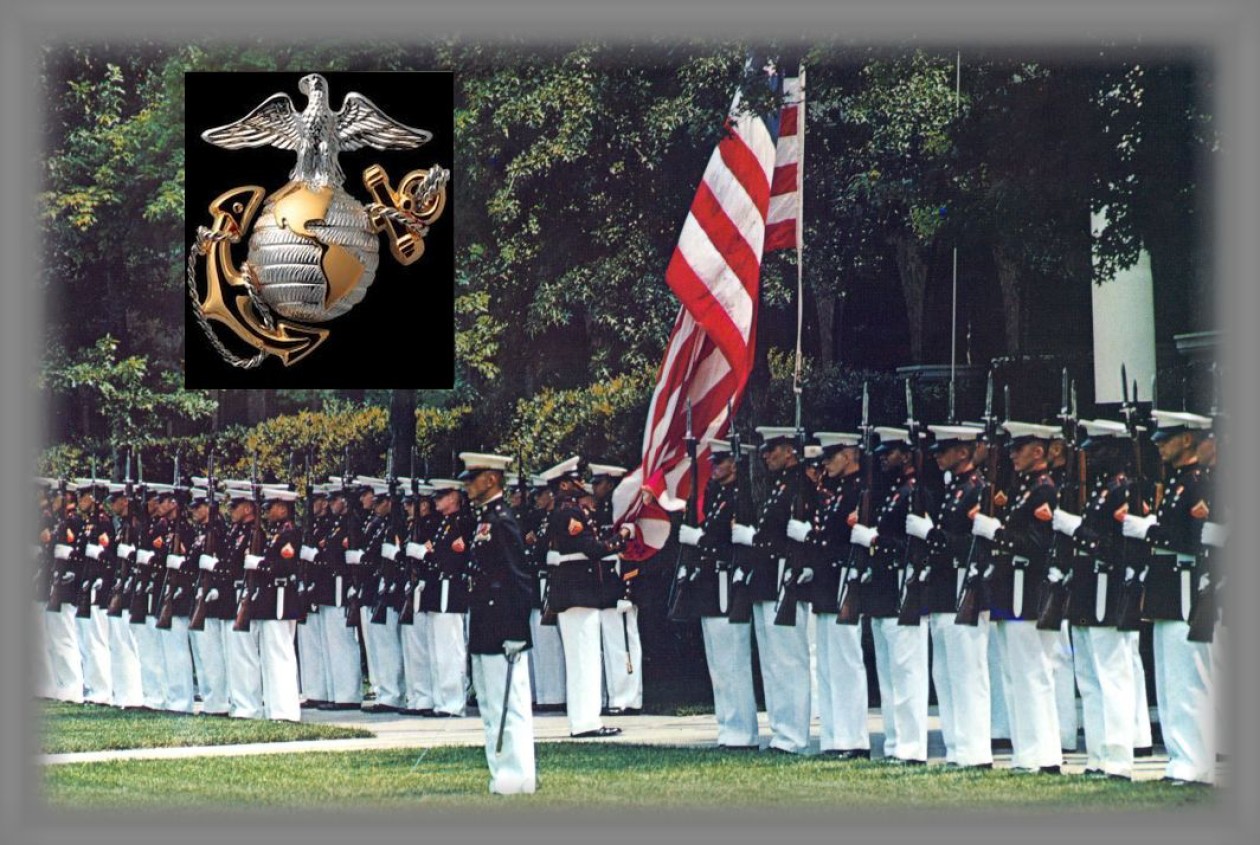
BIRMINGHAM, ALABAMA – Revelations that the insurrection at the US Capitol included many former and current members of America’s armed forces have been met with alarm. And yet, as a 35-year veteran and retired commandant of the US Marine Corps, I saw the events of January 6 as the predictable culmination of a growing disconnect between the US military and civilian society.
Once home, many veterans joined organizations like the Veterans of Foreign Wars and the American Legion, where they were surrounded by like-minded people who had served, suffered, and sacrificed together. Jobs were plentiful, and Americans took pride in their country and their military.
Similarly, in the Korean War less than a decade later, though America was never “all in,” it nonetheless had clear strategic goals. As in WWII, US servicemen and women did a remarkable job and came home to an appreciative country.
But then came Vietnam, where most Americans never really knew what their country was fighting for. When the conflict finally came to its ignominious end in April 1975, there was no victory to celebrate (and it certainly was not fireworks that flew from the roof of the US embassy in Saigon). Unlike previous generations, those who fought in Vietnam were not honored for their service and sacrifice. Equally important, the public backlash against the war led to the end of military conscription, which fundamentally transformed the relationship between the military and the American people. The rift created by the shift to an all-volunteer military has grown wider ever since.
After Vietnam, America’s next major war was Desert Storm, in 1990. Again, clear strategic goals were met in a dramatic fashion, and US servicemen and women returned to a proud country – on the cusp of becoming the world’s only remaining superpower with the collapse of the Soviet Union the following year.
Yet by the end of the Gulf War, globalization and technological change had already begun to reshape American society. Old-line industries were being upended, and many manufacturing jobs were disappearing. Although immigration had only a minor effect on the big economic picture, it became a hot-button political issue for those who found themselves out of work. At the same time, a new wave of social-justice issues also started gaining momentum during this period. As a microcosm of America, the US military was not immune to these political dynamics.
It was against this political, social, and economic backdrop that America embarked on its “long war.” Much like Vietnam, the “War on Terror” lacks clear strategic goals and has lost public buy-in over time. Many of those who have fought it subscribe to the apocryphal refrain that while the military was at war, America was at Walmart. After serving multiple tours in Iraq or Afghanistan, servicemen and women who sacrificed years of their lives have received little recognition.
In his 1973 book, The American Way of War, the historian Russell F. Weigley quoted US General George C. Marshall as saying, “a democracy cannot fight a Seven Years’ War,” because any protracted conflict eventually will lose the support of the electorate. The longer a war runs – particularly when it becomes cross-generational – the greater the disconnect between the typical citizen and the soldiers, sailors, airmen, and marines who serve.
he War on Terror is an abiding case in point, helping to shed light on the unrest and extremism that burst into public view at the Capitol. A small minority of alienated former and active service members have concluded that something is wrong in the America for which they fought and sacrificed. The past two presidential elections have fueled this discontent and convinced some that they have a duty to confront perceived domestic “enemies.” Political leaders, meanwhile, have exploited these sentiments for their own advantage.
The COVID-19 pandemic also contributed to a perfect storm. As the economy shed jobs – particularly at the lower end of the income distribution – face-to-face interactions were no longer possible. With deepening social atomization, it has become more difficult to experience solidarity. Angst or boredom have afflicted many, and some have found refuge in online communities espousing extremist ideologies. The 2020 presidential election brought the situation to a boiling point. A sitting commander-in-chief openly sought to overturn a free and fair election with lies and intimidation, and a small minority of his acolytes answered his call to action. Really?
But Americans should have faith. Notwithstanding a few outliers, the US military is unwavering in its support of, and dedication to, the US Constitution. Those in its ranks who harbor extremist views will be discovered and dealt with appropriately. Looking ahead, recruitment methods will be strengthened to weed out extremists. Recruiters will have to look not only at candidates’ social-media activity but also at their “body paint” (tattoos) and other potential indicators of extremist or racist sympathies. Interviews will need to be more pointed, and education for active members improved.
While the troubling trajectory of US military-civil relations has created fertile ground for some members to be radicalized, it is important to remember that the insurrectionists represent an exception. The US military has defended American democracy for centuries and will continue to do so, in keeping with our noblest traditions. Yes, I agree general, you can bet on it!
CHARLES C. KRULAK
Writing for PS since 2020
4 Commentaries
In sum, I categorize this fellow in the same company as Mattis, Allen, and all the other Kool Aid drinking generals viewing the military through their woke eyes and ears. Krulak says the recruiters will take care of this supposed problem. LOL What does he know about recruiting — Nothing!