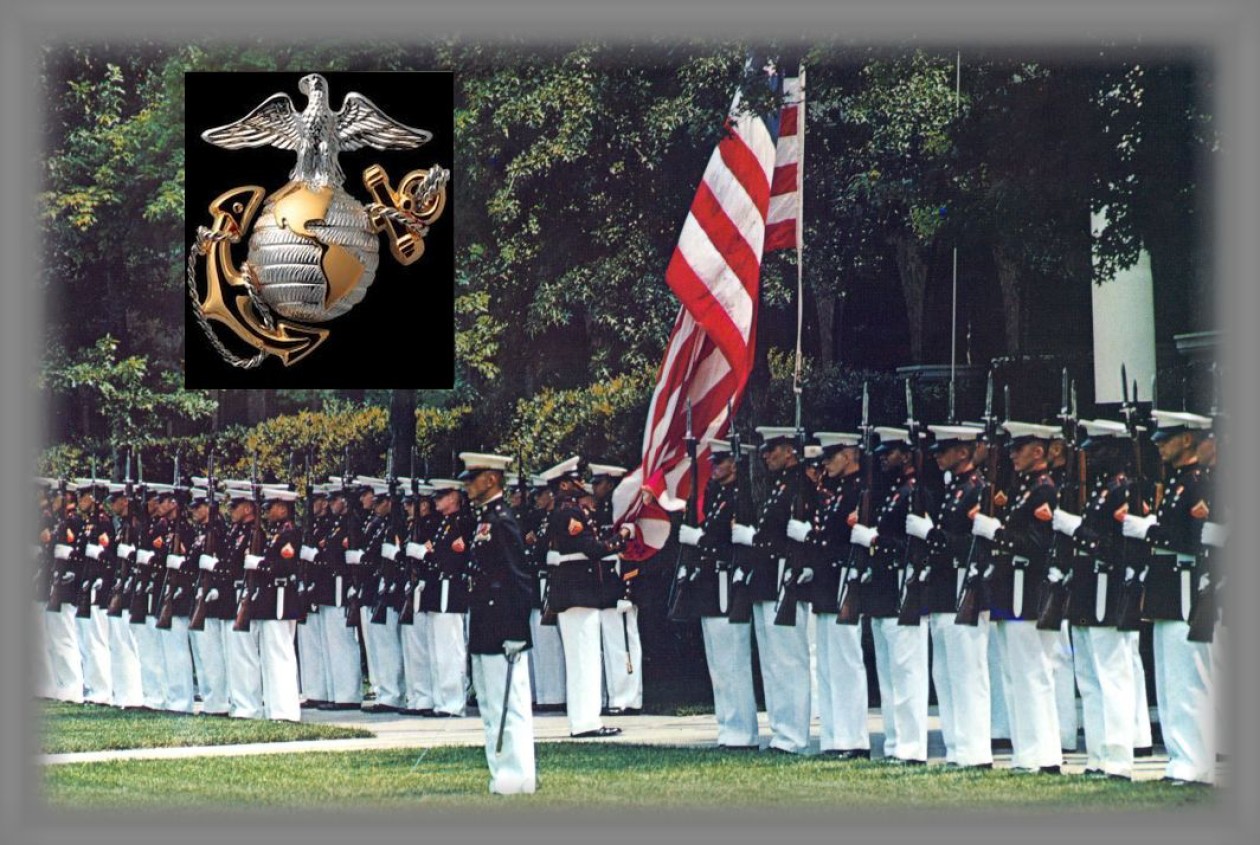
Interesting article from the Wall Street Journal by Peggy Noonan. I know John Kelley, watched him work as a Bn S-3 during a MCRES of an infantry Bn preparing to deploy and I was the Bn’s umpire back in 87. After the grueling 72 hours of hell, I asked the Bn Commander, “Where in the hell did you find your S-3?” He laughed and said, “That boy’s going to be a general someday.”
I realized as I wrote this that I’ve never met a Kelly I didn’t like, who wasn’t admirable. There was the great journalist Michael Kelly, lost in Iraq in 2003 and mourned still by anyone with a brain: What would he be making of everything now? There’s Gentleman Jim Kelly, formerly of Time and an award-winning journalist. Ray Kelly was one of New York’s finest police commissioners. Megyn Kelly is a brave, nice woman. I wrote once of a small miracle in which a group of friends arrived, late and in tears, to see John Paul II celebrate Mass in New York. The doors of the cathedral were shut tight. A man in a suit saw our tears, walked over, picked up a sawhorse and waved us through. As we ran up the steps to St. Patrick’s, I turned. “What is your name?” I cried. “Detective Kelly!” he called and disappeared into the crowd.
Grace Kelly was occasionally brilliant and always beautiful. Gene Kelly was a genius. There is the unfortunate matter of the 1930s gangster “Machine Gun Kelly,” but he is more than made up for by Thomas Gunning Kelley (an extra e, but same tribe), who in 1969 led a US Navy mission to save a company of Army infantrymen trapped on the banks of a canal in South Vietnam’s Kien Hoa province. He deliberately drew fire to protect others, was badly wounded, waved off treatment, saved the day. He received the Medal of Honor. There are other Kellys on its long, illustrious rolls.
So Gen. John Kelly (retired), US Marine Corps, veteran of Anbar province, Iraq, and new chief of staff to President Trump: onward in your Kellyness.
Everyone wonders what he’ll do, what difference he’ll make. He is expected to impose order and discipline, tamp down the chaos. I suspect his deepest impact may be on policy and how it’s pursued, especially in the area of bipartisan outreach.
American military leaders are almost always patriotic, protective, professional, practical. They’re often highly educated, with advanced degrees. Mary Boies, who for two decades has worked with the military as a leader of Business Executives for National Security, said this week: “In general, military top brass are among the most impressive people in our country.”
It’s true. And in a nation that loves to categorize people by profession, they can be surprising.
Generals and admirals are rarely conservative in standard or predictable ways, ways in which the term is normally understood. They’ve been painted as right-wing in books and movies for so long that some of that reputation still clings to them, but it’s wrong.
They are not, or not necessarily, economic conservatives. Top brass are men and women who were largely educated in, and came up in, a system that is wholly taxpayer-funded. Their primary focus is that the military have what it needs to do the job. Whatever tax rates do that, do that. They are not economists, they don’t focus on Keynesian theory and supply-side thought. They’re like Gen. Dwight Eisenhower, who saw the historically high tax rates of the Roosevelt-Truman era and thought fine, that’s how we won World War II. He didn’t seem concerned about tax rates until he’d been president for a while and started hearing about the problems of business while playing golf with CEOs.
Generals are not romantic about war, because it’s not abstract to them. As Boies says: “Army officers know better than anybody the limits of military hard power. Military people hate war because they’ve seen it and know both its limitations and its devastating effects.”
In my observation generals are both the last to want to go in (“Do you understand the implications of invasion? Do you even know the facts on the ground?”) and the last to want to leave (“After all this blood and sacrifice, this hard-won progress, you’re pulling out because you made a promise in a speech?”). They hate hotheaded, full-of-themselves civilians who run around insisting on action. Those civilians are not the ones who’ll do the fighting, and as public allies they’re not reliable.
On social issues they generally tend to be moderate to liberal. I have never to my knowledge met a high officer who was pro-life. They largely thought Don’t Ask, Don’t Tell a reasonable policy, but they’re realists: Time moves on, salute and execute. They don’t want to damage or retard their careers being on the wrong side of issues whose outcomes seem culturally inevitable. You don’t die on a hill that is not central to the immediate mission.
They are as a rule not deeply partisan. Those who work in the Pentagon have to know how to work with both parties and negotiate their way around partisan differences. (Enlisted men in my experience are more instinctively conservative, though often in interesting ways.)
When things are working right, chiefs of staff have an impact on presidential thinking. They guide discussions toward certain, sometimes directed conclusions. They’re expected to give advice, and it’s expected to be grounded in knowledge and experience.
It may be easier for Kelly to impose order than people think. Sacking Anthony Scaramucci sent a message. The warring staffers around Kelly know it won’t be good for them if they don’t support him, at least for now. If they fight him with leaks, they’re revealed as part of the problem of the past six months.
If they are compliant and congenial, it will look like they weren’t the problem; someone else was. Also they’re tired of being part of a White House that has been famously dysfunctional. It will help their standing in the world to be part of something that works. Similarly with Trump: If it works with Kelly, the first six months were Reince Priebus’ fault, if it doesn’t work, it was the president’s.
Beyond that, a good guess is that Kelly will not be especially interested in partisan differences; he will not be ideological. He will guide Trump in the direction of: Solve the problem.
On tax reform, for instance, his instinct will be to figure the lay of the land and try to get to the number it takes to pass a bill with both parties. A friend who once worked with Kelly said: “He won’t go ‘This has to be comprehensive, historic.’ He’ll figure the few things both sides agree on and build out from there. You’ll get a compromise. It won’t solve everything, but it will be good for the country and it will get Trump on a path to somewhere, because right now he’s on a path to nowhere.”
Generals are not known for a lack of self-confidence. If he goes up against Mitch McConnell, it won’t be big dawg versus eager puppy, it will be big dawg versus big dawg. And McConnell has already disappointed the president. Kelly hasn’t.
Trump, whatever his public statements, doesn’t need to be told things haven’t gone well; he knows. He has nowhere else to go, and the clock’s ticking.
Kelly has the power of the last available grown-up.
Another advantage: He doesn’t need the job. He’s trying to help, as a patriot would. But this is not the pinnacle for him. His whole career has been pinnacles.
Originally posted 2017-08-11 09:40:48.
Like this:
Like Loading...